


Technostress in the workplace : understanding and taking Action
Posté le
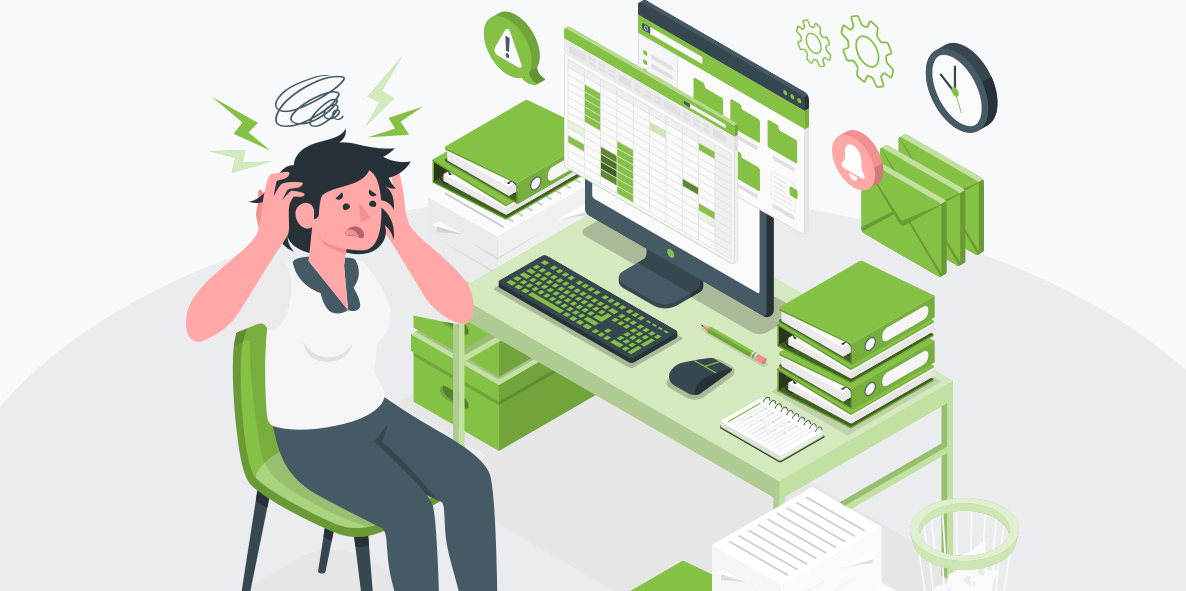
What is technostress ?
Technostress, or technological stress, is a state of stress caused by excessive or poorly adapted use of information and communication technologies (ICT). It can lead to issues related to well-being and performance at work.
While new technologies have revolutionized how organizations operate and are structured, they have also entered the home environment. In short, they are everywhere—and this is not always an advantage.
The impacts of technology
A finer boundary between professional and private life
This omnipresence has blurred the boundary between professional and private life. With the widespread use of smartphones and mobile internet, nothing prevents these two spheres from becoming increasingly porous. Some individuals find themselves constantly checking their emails outside working hours, while others experience it as an invasion and a form of permanent control over their personal lives.
To address this issue, nothing is more effective than maintaining a clear separation between professional and personal tools. Whether for your email address or your mobile phone number, keep one dedicated to professional use and another exclusively for private life. Make a conscious effort to leave your professional equipment at work and your personal devices at home.
Leave and logout
The same applies to your time off, no matter how short it may be. You need to be able to disconnect from work—and even from technology altogether. Plan ahead and schedule specific periods with and without access to digital tools.
Sleep quality
It is not uncommon to hear that some people sleep with their smartphones next to them. While some use them only as alarms, others leave them connected throughout the night, risking (or intentionally allowing) being woken up by every notification. Beyond these nighttime disturbances, keeping a phone in the bedroom also encourages scrolling before sleep, often without any real purpose. However, screen use before bedtime delays sleep onset and disrupts sleep cycles. In other words, smartphones should be kept out of the bedroom.
Information fatigue
The lack of energy linked to the presence of ICT during sleep is not the only source of fatigue. Indeed, ICT also generates information fatigue, which refers to an overload of information.
This can result from online searches. With just a few clicks, thousands of results are displayed, and it becomes up to the user to identify what they were actually looking for. One solution is to clearly define your search in advance in order to avoid getting lost among irrelevant information.
The requirement of ICT
Another source of information fatigue is linked to the demands of ICT. Indeed, the number of emails received each day can sometimes become excessive, potentially leading to a loss of employee engagement. The solution? Encourage your team to establish guidelines for managing email flow: this helps prevent everyone from having to read long email chains that are ultimately not relevant to them.
Constant changes
Finally, technologies are constantly evolving. Just as you finish getting up to date with the latest developments, new ones are already entering production. At this pace, it is easy to get lost. Therefore, do not hesitate to seek help from the most tech-savvy people around you. They will gladly explain how to use the tools you need, without requiring you to always be at the cutting edge of every new development.
The positive advances of ICT
However, do not assume that ICTs only have negative effects. Thanks to these new technologies, it is now possible to work remotely, for example, or to stay in contact with an expatriate colleague. The list of ICT benefits is still long, but unfortunately it is not the focus of this article.
In conclusion, do not forget to disconnect from time to time, and above all do not make an indigestion of new information and communication technologies.

Table des matières
Les actualités RH de Balencio directement dans votre boîte mail
